


Unlock Peace of Mind with Detailed Stucco Inspections in Delaware

Unlock Peace of Mind with Detailed Stucco Inspections in Delaware
Stucco moisture inspection reports in New Castle County, Delaware and Chester County, Pennsylvania identify hidden water intrusion, installation defects, and substrate damage that general home inspections miss. LePore Stucco Services LLC reviews these findings and proposes prioritized repairs targeting faulty flashing rather than unnecessary full tear-offs.
Key Takeaways
Stucco moisture inspection reports map hidden water intrusion, installation defects, and substrate damage behind exterior stucco cladding.
Standard home inspections miss trapped moisture, rotting sheathing, and failing flashings that threaten structural integrity.
Inspectors use moisture meters, thermal imaging, and invasive probe testing to measure moisture content at multiple depths.
Most water intrusion traces to missing, undersized, or improperly installed flashing, not the stucco itself.
What Is a Stucco Moisture Inspection Report?
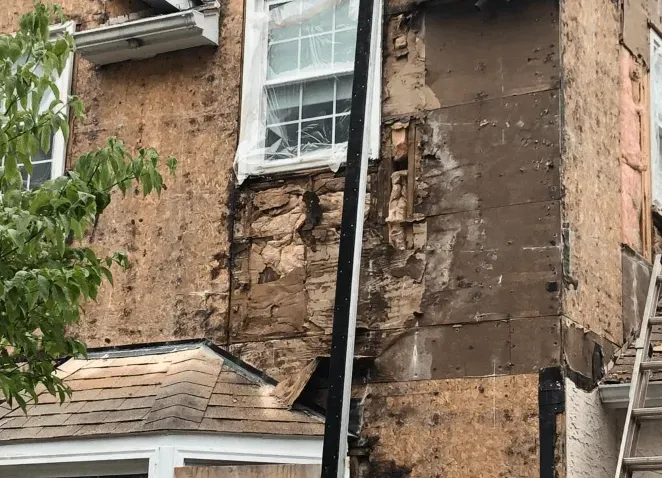
A stucco moisture inspection report is a forensic document that maps hidden water intrusion, installation defects, and substrate damage behind exterior stucco cladding. Standard home inspections miss these conditions entirely. The report reveals what visual checks cannot: moisture trapped inside wall cavities, rotting sheathing, and failing flashings that threaten the structural integrity of homes across Chester County and New Castle County.
What Does the Report Uncover That a General Inspection Misses?
Stucco-clad homes conceal moisture intrusion and installation defects that remain invisible during a routine home inspection. A visual walkthrough or standard property evaluation does not disclose the issues or the damage. The report documents these hidden conditions through systematic testing. It identifies the exact locations where water bypasses the exterior and becomes trapped against the building frame.
How Is the Inspection Conducted?
Specialized stucco inspection Chester County PA and stucco inspection New Castle County DE services apply to hardcoat stucco, EIFS, and other adhered exterior cladding systems. Each reading gets recorded with precise location data. The resulting report provides a room-by-room moisture map that pinpoints problem areas before they escalate into major structural failures.
The report serves buyers, sellers, and homeowners who need an objective assessment of a stucco-clad property. Real estate transactions often hinge on its findings. A stucco inspection in the Main Line and West Chester area follows the same rigorous protocols, documenting conditions that negotiation and repair decisions depend upon.
LePore Stucco Services regularly reviews these moisture intrusion reports to develop clear, cost-effective repair plans tailored to each home. The company translates probe readings and thermal anomalies into actionable remediation scopes. Without this documented evidence, homeowners risk overlooking damage that compounds with every rainfall.
How Do Inspectors Measure Moisture in Stucco?
Moisture measurement in stucco relies on forensic testing methods that go far beyond a visual walkaround. Qualified inspectors deploy moisture meters, thermal imaging, and invasive probe testing to detect hidden water that surface observation cannot reveal. Stucco-clad homes conceal moisture intrusion, installation defects, and hidden substrate damage that remains invisible during a general home inspection. Without these specialized tools, a homeowner risks undetected rot spreading behind intact-looking cladding.
What Tools Do Stucco Inspectors Use?
A stucco moisture inspection report depends on three primary forensic methods. Each tool serves a distinct purpose in mapping moisture levels across the wall assembly.
Tool | Function |
Moisture meters | Non-invasive surface scanning to identify elevated moisture zones |
Thermal imaging | Detects temperature differentials that signal trapped water |
Invasive probe testing | Penetrates the cladding to measure moisture content inside the wall cavity |
The process is methodical and driven by a defined procedure. Inspectors begin with a careful visual evaluation of the cladding system, examining material defects, flashing details, installation deficiencies, and termination points. Surface scanning with moisture meters follows, flagging areas that warrant deeper investigation.
How Does Invasive Testing Work?
Invasive probe readings reveal moisture levels inside the wall assembly that no surface tool can confirm. The inspector drills small openings at suspect locations and inserts a probe to measure moisture content within the substrate. These readings quantify the severity of hidden damage. A stucco inspection Chester County PA professional performs resistance testing and moisture metering across boroughs including Downingtown, applying the same forensic rigor to every property. The same standards apply for a stucco inspection New Castle County DE, where inspectors follow an identical process-driven protocol. Each probe site generates a data point that builds a complete moisture map, distinguishing superficial dampness from structural saturation.
Why Do Chester County Reports Often Show High Readings?
Stucco applications in the northeast over the last 20 years are frequently defective or improperly installed, according to Stucco Safe. Chester County homes built between 1995 and 2010 face an additional structural vulnerability. Many of these properties used stucco systems that trap moisture behind the walls rather than letting it drain. A stucco moisture inspection report from this era rarely comes back clean.
The root cause is almost never the stucco itself. Most water intrusion issues trace to missing, undersized, or improperly installed flashing. Unsealed transitions where different exterior materials meet create entry points that let water bypass the cladding entirely. Once moisture penetrates the building envelope, it stays trapped inside the wall cavity. Probe readings climb. Substrate rot begins. The visible stucco surface often shows no warning signs at all.
What construction era produces the most failures?
Homes built between 1995 and 2010 throughout the Main Line and surrounding communities carry the highest risk. Builders during that period frequently installed barrier-type stucco systems with no drainage plane. These assemblies rely on a perfect surface seal. Any flashing defect or unsealed penetration channels water directly into the sheathing. A stucco inspection Chester County PA performed on a home from this era typically reveals elevated moisture in multiple wall sections.
Where do inspectors find the most moisture damage?
Chester County inspectors routinely test in Downingtown, West Chester, Malvern, Kennett Square, and Coatesville. The pattern remains consistent across boroughs. Window openings, deck ledger attachments, and roof-to-wall intersections account for the majority of high readings. These transition points concentrate the flashing failures that drive moisture intrusion. Understanding the difference between surface repair and full stucco remediation becomes critical when probe results exceed safe thresholds. A stucco inspection New Castle County DE follows the same forensic approach, targeting the same vulnerable details that plague homes throughout the region.
What Do High Probe Readings Actually Mean?
High probe readings signal moisture has penetrated past the stucco cladding and reached the substrate beneath. The stucco itself rarely fails. Water finds its way behind the surface through a different path entirely.
Water intrusion is typically caused by improper flashing at windows, doors, rooflines, and foundation transitions. This issue affects stucco, fiber cement, and HardiePlank homes alike. A stucco moisture inspection report documenting elevated readings points to a flashing or transition detail failure, not a cladding defect.
Why Do High Readings Often Lead to Unnecessary Tear-Offs?
Many homeowners receive a recommendation for a full exterior tear-off when stucco shows signs of failure. That recommendation overlooks the real mechanism at work. The moisture bypassed the surface through a gap, crack, or missing flashing component. Removing all the stucco addresses the symptom while leaving the root cause untouched.
Can a Home With High Probe Readings Be Repaired Selectively?
In the company's experience, it is rare that all stucco needs to be removed. Targeted repairs at the intrusion points resolve the problem without demolition of sound cladding. The same water management principles apply whether the exterior is stucco, fiber cement, or HardiePlank. A thermal imaging inspection helps pinpoint exactly where moisture has accumulated behind the wall assembly.
A stucco inspection Chester County PA or stucco inspection New Castle County DE that returns high probe readings should trigger an investigation of flashing details, not an automatic tear-off. The numbers on the report measure trapped moisture. They do not measure stucco failure. Understanding that distinction saves homeowners from unnecessary reconstruction costs and preserves the building envelope where it remains sound.
How Should Homeowners Act on a Report?
A stucco moisture inspection report demands a methodical, evidence-based response. Homeowners in Chester County and New Castle County who delay action risk structural decay that compounds repair costs. The first step is verifying the report’s objectivity. An inspector with no financial stake in repair work guarantees unbiased reporting, according to Stucco Safe. Independence from remediation contractors eliminates conflicts of interest that skew findings toward unnecessary work.
What makes a repair plan effective?
An effective plan targets root causes rather than surface symptoms. The true sources of intrusion include roof-to-wall intersections, window and door openings, and penetrations where water bypasses the cladding. A prioritized scope addresses these failure points in order of severity. Targeted repairs stop moisture at the source without unnecessary demolition, preserving intact stucco and reducing project scope.
Why avoid full tear-offs when possible?
Full tear-offs represent the most invasive and costly response to moisture readings. Surgical stucco repairs have saved homeowners millions in unnecessary tear-offs and reconstruction costs over the past decade. This approach removes only damaged sections and corrects the flashing details that caused the failure. Homeowners reviewing a stucco inspection Chester County PA or stucco inspection New Castle County DE report should seek contractors who practice this precise methodology. Expert guidance on stucco repair techniques helps property owners understand the range of options before committing to a remediation path.
FAQ
What does a stucco moisture inspection report reveal?
It maps hidden water intrusion, installation defects, and substrate damage behind exterior stucco cladding, including moisture trapped inside wall cavities, rotting sheathing, and failing flashings that threaten structural integrity.
How do inspectors measure moisture in stucco?
Inspectors use moisture meters, thermal imaging, and invasive probe testing to measure moisture content at multiple depths, recording each reading with precise location data to build a room-by-room moisture map.
What causes most water intrusion in stucco homes?
Most water intrusion traces to missing, undersized, or improperly installed flashing, not the stucco itself, so LePore Stucco Services LLC proposes prioritized repairs targeting faulty flashing rather than unnecessary full tear-offs.
Conclusion
A stucco moisture inspection report is a diagnostic tool, not a demolition order. Homeowners in Chester County and New Castle County who read elevated probe readings as proof of cladding failure risk approving work that never addresses the true source. The next step is straightforward: verify the report's independence, then seek a contractor who investigates flashing details and proposes prioritized, targeted repairs. That decision preserves sound stucco, controls project scope, and resolves the intrusion at its origin rather than masking symptoms behind new construction.
Comments