


Kick-Out Flashing Stucco Repair: Stop in Southeastern Pennsylvania

Kick-Out Flashing Stucco Repair: Stop in Southeastern Pennsylvania
Kick-out flashing diverts roof runoff away from stucco walls at roof-to-wall intersections, preventing the hidden water intrusion that causes staining and rot. LePore Stucco Services LLC, a third-generation, family-owned contractor, installs and corrects this flashing for homeowners throughout Southeastern Pennsylvania.
Key Takeaways
Kick-out flashing sits at the bottom of a roof-to-wall joint and bends outward like a spout.
Missing, short, or buried kick-out flashing ranks as the leading mistake at roof-to-wall junctions.
The International Residential Code requires flashing at wall and roof intersections, so repairs must restore a code-compliant detail.
LePore Stucco Services LLC provides targeted, cost-effective stucco flashing repair homeowners can schedule without a full tear-off.
What Causes Roof-to-Wall Stucco Leaks?
A roof to wall stucco leak begins where a sloped roof meets a vertical stucco wall. The junction concentrates runoff into a single stream that, without proper diversion, saturates the wall assembly behind the cladding.
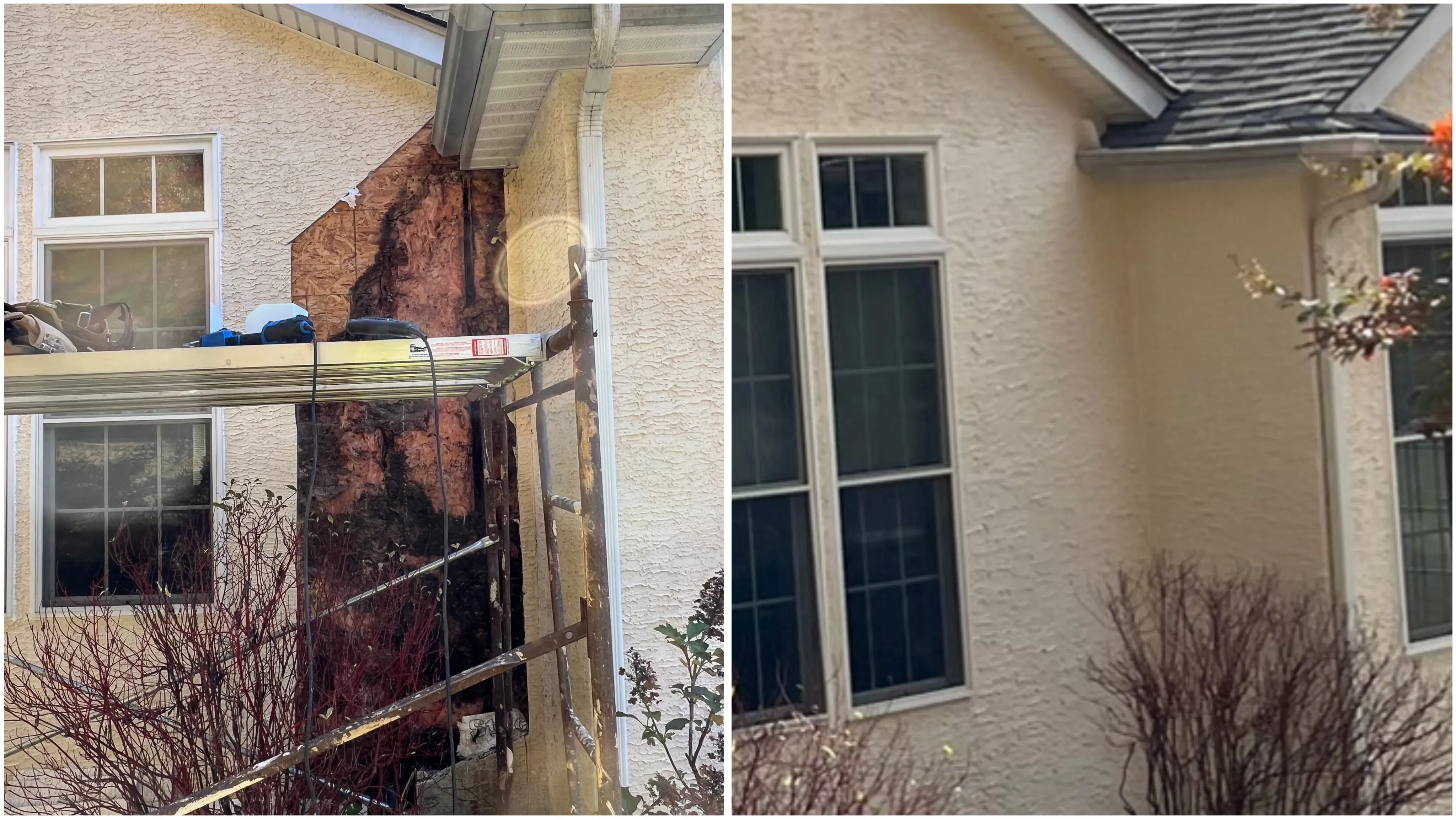
Kick-out flashing stucco repair addresses the most common failure point. Positioned at the low end of the joint, the diverter channels runoff into the gutter rather than allowing it to run down the wall. When that transition is missing, too short, damaged, or buried by later stucco work, runoff bypasses the gutter and reaches the wall assembly. Because the runoff volume is concentrated at one point, moisture damage may extend far below the visible roofline before a homeowner notices a problem.
Why does stucco fail at roof intersections even though the material resists water?
Stucco is fairly water-resistant by itself. The vulnerability lies in the openings and transitions. Walls must be installed correctly to be fully waterproof. A single missing piece of flashing at a roof-to-wall junction defeats the entire assembly. Water bypasses the surface and attacks the sheathing and framing directly.
How do homeowners in Southeastern Pennsylvania discover these leaks?
Visible staining or efflorescence on interior walls often appears months after the intrusion starts. By then, rot has already progressed behind the stucco. A detailed inspection of kickout flashing details on Pennsylvania stucco homes reveals whether the original installation was omitted or compromised. LePore Stucco Services LLC, a third-generation, family-owned stucco repair company, provides stucco flashing repair PA homeowners rely on to correct these defects at their source rather than masking surface symptoms.
How Do You Repair Stucco Flashing Step by Step?
Repairing stucco flashing follows a defined sequence that begins with inspection and ends with verified water diversion. The International Residential Code requires flashing at wall and roof intersections, so the work must restore a code-compliant detail rather than patch a surface stain.
Prerequisites come first. A technician inspects the roof-to-wall junction, confirms the extent of moisture damage, and reviews any existing inspection report before ordering materials.
Remove the stucco and any damaged sheathing at the intersection to expose the framing.
Install new step flashing woven into each course of roofing material.
Set the kick-out flashing at the low end of the run so runoff discharges into the gutter.
Integrate the moisture-drainage detailing that carries water out of the wall assembly.
Seal the transitions and re-clad the opening with matching stucco.
A properly installed kick-out flashing works with drainage detailing to move water out of the wall. Long-term waterproofing of a stucco home depends on this multi-layer approach, not on a single sealant bead.
What Does a Roof to Wall Stucco Leak Look Like?
A missing or short kick-out concentrates runoff at the junction, producing staining, efflorescence, and soft sheathing. Because moisture migrates through the assembly, damage frequently reaches farther than the visible mark suggests. Homeowners in Chester County, Delaware County, and Northern Delaware frequently discover these signs months after the leak began.
Why Choose Targeted Stucco Flashing Repair in PA?
LePore Stucco Services LLC provides targeted, cost-effective stucco flashing repair PA homeowners can schedule without a full tear-off. The company addresses faulty flashing as the real cause of stucco failure, not surface damage. This kick-out flashing stucco repair approach stops moisture at the source and avoids unnecessary demolition.
What Mistakes Weaken Stucco Leak Prevention?
Water that slips behind stucco can travel along sheathing, framing, or building paper before surfacing as an interior stain far from the actual gap. Homeowners typically notice stains first, while trained contractors locate the true source during inspection.
Kick-out flashing stucco repair fails most often when subsequent work compromises the diverter's ability to clear the wall.
Why does a roof to wall stucco leak appear far from the roof?
Concentrated runoff at a single junction point drives moisture deep into the assembly. The damage then spreads along hidden pathways rather than staying near the entry point. A roof to wall stucco leak in Chester County or Delaware County often surfaces at a ceiling or interior wall well below the roofline.
What should homeowners avoid doing?
Patch visible stains without tracing the water path.
Accept a full tear-off before flashing is inspected.
Skip documentation of the repair scope.
These are pitfalls to avoid, not repair steps; the actual repair sequence is the five-step process described above.
LePore Stucco Services LLC does not apply temporary patches. The company delivers lasting stucco flashing repair PA homeowners can verify, and its common stucco questions explain the inspection process.
FAQ
What does kick-out flashing do at a roof-to-wall joint?
It redirects roof runoff into the gutter rather than down the stucco wall.
Why does stucco leak at roof intersections if stucco resists water?
Without that diverter, water bypasses the surface and attacks sheathing and framing directly.
Does the repair need to meet a code requirement?
Yes. Repairs must restore a code-compliant detail at the intersection, as required by building code.
Conclusion
When a roof-to-wall stucco leak appears, the next step is a focused inspection of the kick-out flashing detail rather than a surface patch or a full tear-off. LePore Stucco Services LLC provides targeted, cost-effective stucco flashing repair that corrects the true source of intrusion and restores a code-compliant detail at the intersection. Homeowners in Chester County, Delaware County, and Northern Delaware can request a consultation and quote to begin with an inspection-driven scope.
Comments