


Building Science: Thermal Imaging Prevents Costly Stucco Failures
Building Science: Thermal Imaging Prevents Costly Stucco Failures
Thermal imaging and moisture meters locate hidden water damage behind stucco walls before structural rot begins. LePore Stucco Services LLC, a third-generation family-owned company in Avondale, PA, uses diagnostic testing to pinpoint faulty flashing, the true intrusion source, allowing surgical repairs instead of unnecessary full tear-offs for Chester County homeowners.
Key Takeaways
Thermal imaging and moisture meters locate hidden water damage behind stucco walls before structural rot begins.
Most exterior failures originate in missing or improperly executed flashing and unsealed transitions, not the stucco itself.
Thermal imaging and moisture meters locate hidden water damage behind stucco walls before structural rot begins.
Diagnostic testing identifies exactly where water enters a wall system, sparing homeowners from full tear-offs that address symptoms instead of root causes.
What is building science and why does it matter for stucco?
Building science explains how water, air, heat, and vapor move through a home's exterior assembly. Most exterior failures originate not in the stucco itself, but in missing or improperly executed flashing and unsealed transitions. Homeowners who ignore these principles risk structural decay hidden behind an intact-looking surface.
LePore Stucco Services LLC applies building science to every surgical stucco repair project. The company's approach targets the true source of moisture intrusion rather than masking surface symptoms. Water intrusion is typically caused by improper flashing at windows, doors, rooflines, and foundation transitions. This issue affects stucco, fiber cement, and HardiePlank homes alike.
Why does flashing matter more than the stucco surface?
Flashing directs water away from vulnerable joints and openings. When flashing fails, water bypasses cladding and damages wall cavities long before exterior stains show.
Common failure points include:
Window and door openings without proper pan flashing
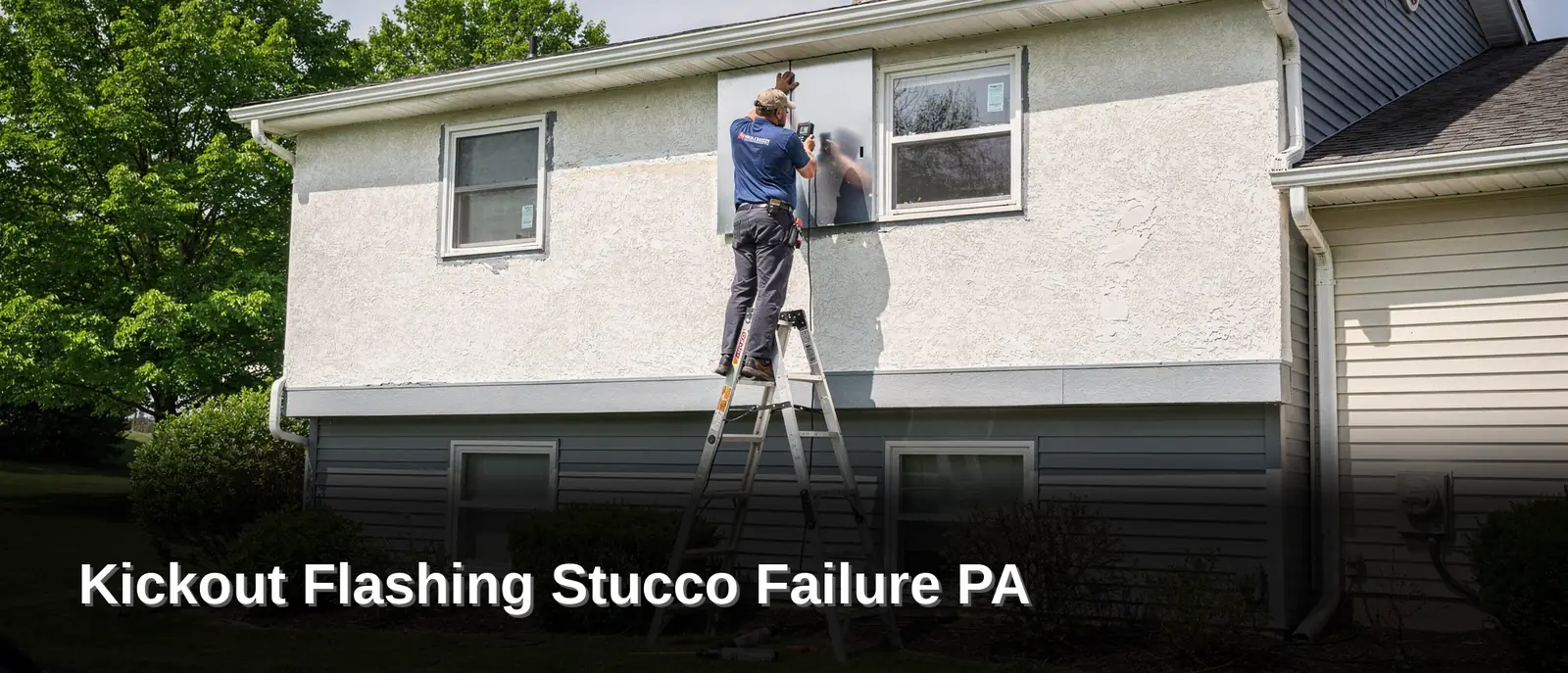
Roof-to-wall intersections missing kick-out flashing
Deck and chimney interfaces left unsealed
Foundation transitions lacking capillary breaks
How does building science change the repair approach?
A building science perspective shifts the focus from full tear-offs to targeted corrections. LePore Stucco Services specializes in surgical stucco repairs and moisture intrusion solutions for single-family homes. Homeowners reviewing effective stucco leak repair methods learn that fixing the flashing detail often resolves the problem without demolition. The company restores building envelopes efficiently by addressing the actual entry points, not the cosmetic damage they eventually produce.
How does a non-invasive infrared inspection detect hidden moisture?
A non-invasive infrared inspection uses thermal imaging and moisture meters to find water trapped behind stucco walls. The technology reveals temperature differences that indicate wet insulation and hidden leaks without cutting into the exterior surface. Homeowners in Chester County PA and Delaware County PA face real risk when moisture goes undetected. A professional inspection identifies problems before they become costly structural failures.
Thermal and moisture diagnostics reveal issues behind walls, roofs, and floors. Infrared thermography detects the thermal signature of damp materials. Moisture meters confirm the presence and extent of water intrusion. Together, these tools give a complete picture of what lies beneath the stucco surface.
What tools does an infrared inspection use?
Infrared camera: Captures temperature variations across the stucco surface. Cooler areas often signal trapped moisture.
Moisture meters: Measure moisture content in wall cavities and sheathing. Readings confirm what the thermal image suggests.
Probe testing: Verifies findings at specific points when needed.
Infrared technology locates hidden moisture damage quickly and accurately. The process avoids major invasive exploration. LePore Stucco Services LLC applies this building science approach to pinpoint moisture intrusion sources before recommending any surgical stucco repair. Homeowners exploring stucco remediation alternatives benefit from knowing exactly where water enters the building envelope.
Why is thermal imaging better than visual inspection alone?
Visual checks miss what happens behind the stucco. Water travels through wall cavities long before stains appear on interior drywall. An infrared scan catches that early movement. The result is a targeted repair plan instead of a full tear-off. LePore Stucco Services LLC reviews stucco inspection findings to develop cost-effective solutions that address the actual source of water entry.
Can diagnostic testing really prevent unnecessary stucco tear-offs?
Diagnostic testing identifies exactly where water enters a wall system, not just where damage appears. This evidence-based approach spares homeowners from full tear-offs that address symptoms instead of root causes. In most cases, a complete exterior tear-off is unnecessary when stucco shows signs of failure. Water intrusion typically originates at improperly flashed windows, doors, rooflines, and foundation transitions. Targeted repairs guided by building science principles stop moisture at the source without demolition.
LePore Stucco Services provides targeted, cost-effective stucco and flashing repairs that resolve the real entry points. No guesswork. No overscoping. Moisture intrusion problems rarely demand whole-wall removal when diagnostic findings pinpoint the specific failed detail. A non-invasive infrared inspection paired with moisture meter readings maps the wet zones behind the cladding. Only the compromised sections require surgical intervention.
How does surgical repair compare to full tear-off remediation?
Surgical stucco repair removes and replaces only damaged sections while preserving intact cladding. Full tear-off remediation strips all stucco regardless of condition, a process that costs more and takes longer. The contrast between these stucco remediation alternatives matters most when inspection data shows localized failure patterns.
Approach | Scope | Typical Driver | Cost Impact |
Surgical repair | Remove only damaged areas | Diagnostic findings | Lower, avoids unnecessary demolition |
Full tear-off | Strip entire exterior | Assumption of widespread failure | Significantly higher |
What have diagnostic methods saved local homeowners?
Homeowners in Chester County PA and Delaware County PA routinely learn that water entry tracks back to a handful of missing kick-out flashings or unsealed penetrations. Fixing those details restores building envelope integrity at a fraction of full remediation cost.
What stucco remediation alternatives exist for Chester County and Delaware County homeowners?
Homeowners in Chester County PA and Delaware County PA do not need to accept a full exterior tear-off as the only answer to stucco failure. LePore Stucco Services LLC provides surgical stucco repair that targets faulty flashing and moisture entry points without unnecessary demolition. The company serves single-family homes and residential properties throughout both counties and Northern Delaware.
A full tear-off removes everything. A surgical approach removes only what failed. That distinction saves homeowners thousands in reconstruction costs while resolving the actual source of water damage.
What does a surgical stucco repair actually involve?
LePore reviews stucco and moisture intrusion reports to develop a clear, cost-effective plan for each home. The company focuses on moisture intrusion solutions rather than surface patching. Faulty flashing at windows, doors, rooflines, and foundation transitions causes most water entry. Correcting those details stops water at the source.
How does building science guide the repair decision?
Building science treats a home as a system where water, air, and heat interact. LePore applies that principle by addressing the real cause of stucco failure, which is faulty flashing rather than surface damage. Homeowners exploring stucco remediation alternatives benefit from this diagnostic-first approach. The company also offers repairing water damaged stucco services that align with the same targeted philosophy.
A non-invasive infrared inspection helps identify hidden moisture before any repair scope is finalized. That evidence-based step prevents guesswork and protects homeowners from paying for work the structure does not need.
FAQ
How does a non-invasive infrared inspection detect hidden moisture?
Thermal imaging and moisture meters find water trapped behind stucco walls by revealing temperature differences that indicate wet insulation and hidden leaks.
How does building science change the repair approach?
Building science shifts the focus from full tear-offs to targeted corrections. Fixing the flashing detail often resolves the problem without demolition, addressing actual entry points instead of cosmetic damage.
Conclusion
For homeowners facing stucco failure, the choice between surgical repair and full tear-off rests on one question: where is the water actually entering? Diagnostic testing answers that question with evidence, not assumption. An infrared inspection paired with moisture readings maps the true entry points, and targeted flashing corrections resolve the intrusion without demolition. Homeowners who pursue this diagnostic-first path protect their investment, preserve intact cladding, and avoid paying for work the structure does not need.
Comments