


Stucco Inspection Main in Main Line and West Chester, Pennsylvania

Stucco Inspection Main in Main Line and West Chester, Pennsylvania
Stucco inspection in Main Line and West Chester, PA requires moisture-meter testing at wall penetrations, chimneys, and window flashing to detect hidden water intrusion. LePore Stucco Services LLC, based in Avondale, PA, performs certified moisture readings, identifies EIFS deficiencies, and delivers written reports documenting readings that exceed established moisture thresholds.
Stucco Failure remains widespread across Main Line. West Chester homes, with an estimated 90% of stucco applications installed in the northeast over the past 15 to 20 years found to be defective, damage that visual inspection alone won't reveal. LePore Stucco Services LLC, based in Avondale, PA, performs certified moisture testing to detect hidden issues before they escalate.
Stucco inspection and moisture testing in Main Line. West Chester, PA identifies hidden water intrusion behind facades before structural damage occurs. Most stucco failures show no visible warning signs. An estimated 90% of stucco applications installed in the northeast over the past 15 to 20 years are found to be defective. LePore Stucco Services LLC, serving these communities from Avondale, PA, reviews inspection findings and executes source-focused repairs.
Key Takeaways
90% of stucco applications installed in the northeast over the past 15-20 years contain defects or improper installation.
Visual inspections alone fail to detect moisture damage, leaks, and mold hidden behind stucco walls.
Trapped moisture causes structural damage that remains undetected for years without professional moisture testing.
LePore Stucco Services provides certified inspections throughout Main Line and West Chester, PA neighborhoods.
What Should You Know Before a Stucco Inspection?
Preparation matters more than most homeowners expect. Main Line properties, from Bala Cynwyd to Malvern, carry stucco failure risk no matter the neighborhood or the home's value, a pattern that holds true whether the house sits on a quarter-acre lot or a wooded estate. Age, price point, and curb appeal offer no protection against moisture damage hiding behind the wall.
Curb appeal deceives. A stucco inspection Main Line PA homeowners can trust looks past the surface. Visual checks alone rarely catch problems until deterioration underneath has already reached an extreme stage. By the time cracks or discoloration show up outside, the damage inside may already be extensive.
Why does stucco fail so often in this region?
Installation quality is the root cause in most cases. An estimated 90% of stucco applications installed across the northeast over the past 15 to 20 years suffer from defects or improper installation, according to research cited by regional stucco inspection professionals. That figure explains why so many Chester County homes eventually need remediation, even when nothing looks wrong from the street.
Sellers and buyers alike benefit from treating inspection as standard procedure. Stucco inspections function as a necessity, not an optional extra, for properties throughout southeastern Pennsylvania. Homeowners preparing for an inspection should:
Gather any past repair records or renovation history
Note visible cracks, staining, or soft spots near windows and rooflines
Schedule inspection before listing or closing on a purchase
How Does Professional Stucco Moisture Testing Work?
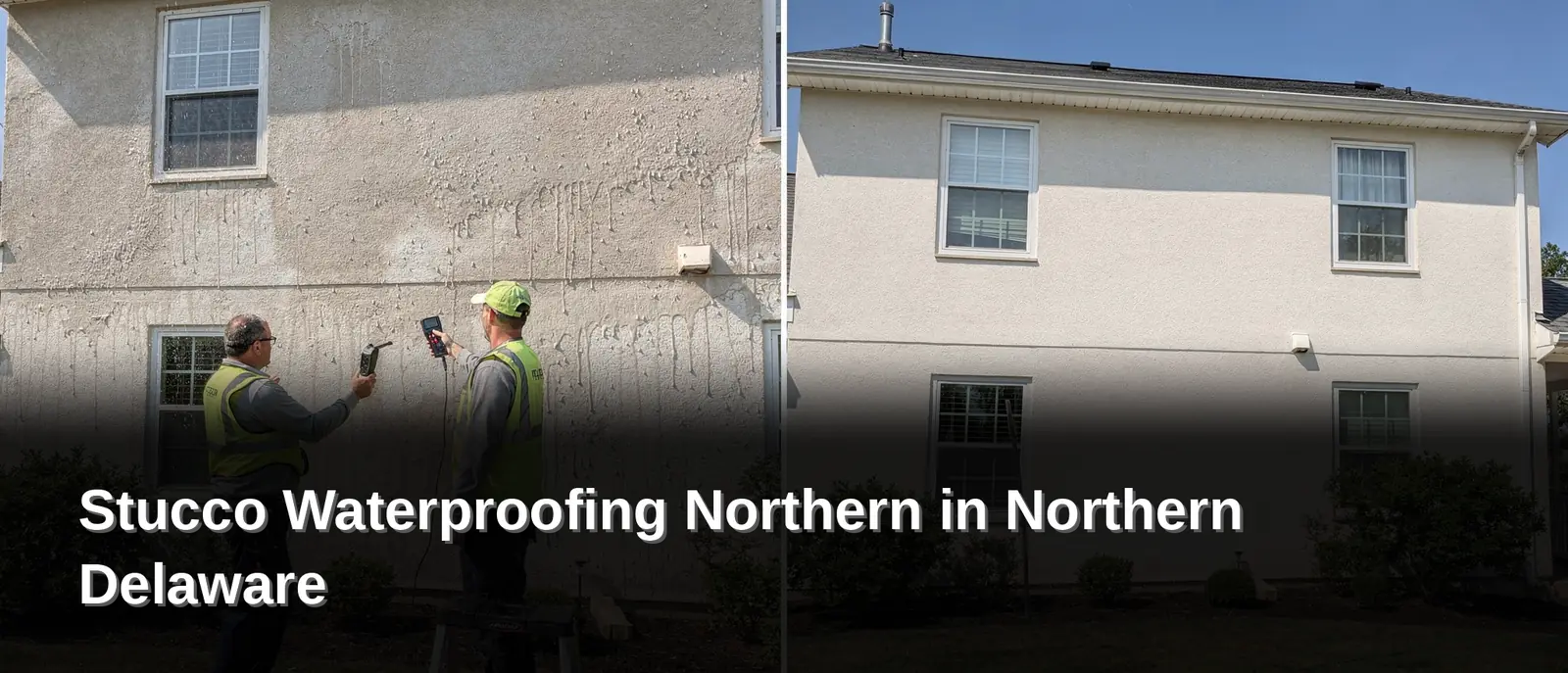
Professional moisture testing combines two distinct diagnostic steps, not one quick walk-around. A trained technician starts with a broad infrared scan to flag possible problem areas across the exterior, then follows with a full deep invasive stucco probe testing PA procedure that pinpoints actual moisture content inside the substrate. Main Line properties in towns like Bryn Mawr, Villanova, and Wayne, along with West Chester homes near the borough's historic district, benefit from this layered approach because surface-level cracking rarely tells the whole story.
A standard walk-around or visual home inspection will not disclose hidden moisture damage. Water often travels behind the cladding for years before any exterior sign appears, which is why relying on curb appeal alone is a costly gamble for buyers and sellers throughout Chester County.
Why does age of construction matter for testing?
Many homes across the Main Line and West Chester built roughly between 1995. 2012 were finished in synthetic or traditional stucco systems. These systems trap water against the sheathing whenever flashing or sealant details fail, so age alone signals elevated risk.
What tools do reliable inspectors actually use?
Reliable Chester County stucco testing contractor teams rely on advanced instruments rather than a casual glance.
Perform an infrared scan to map suspicious zones.
Insert calibrated probes to measure moisture percentages within the wall assembly.
Compare readings against baseline levels for the specific cladding type present.
This method applies equally to synthetic vs traditional stucco inspection work, since both systems fail through the same hidden pathways.
What Should You Do With Your Inspection Report?
A completed report becomes the roadmap for repairs, not a document to file away. Findings on a Main Line colonial or a West Chester farmhouse mean little without a qualified contractor to translate them into action. The steps below outline how homeowners across Chester County typically move from report to resolution.
Read the findings section first. Note which elevations show elevated moisture readings versus areas that passed.
Select a contractor with regional experience. Choose a Chester County stucco testing contractor familiar with local climate patterns and the recurring stucco problems common to older Main Line neighborhoods and newer West Chester developments alike.
Verify credentials before hiring. Ask about specialized certifications and a documented track record evaluating stucco systems, since not every general contractor understands moisture pathways behind a wall assembly.
Request a prioritized repair plan. A qualified provider reviews the report's findings and organizes repairs by urgency rather than proposing a blanket tear-off.
Can a Contractor Review a Report Written by Someone Else?
Yes. LePore Stucco Services LLC regularly receives moisture or stucco inspection reports from homeowners and evaluates them before recommending next steps. The company prioritizes repairs based on severity, targeting the sources of intrusion rather than masking symptoms across the wall surface.
FAQ
How common is stucco failure in Main Line and West Chester homes?
Roughly 90% of stucco applications installed in the northeast over the past 15 to 20 years contain defects or improper installation, regardless of a home's age, price, or curb appeal.
Can a visual inspection detect stucco moisture damage?
No, visual inspections alone rarely catch problems until deterioration has reached an extreme stage. Cracks or discoloration often appear only after significant internal damage has occurred.
What does professional stucco moisture testing involve?
Technicians perform a broad infrared scan to flag potential problem areas, then follow with a deep invasive stucco probe test to measure actual moisture content inside the substrate.
Conclusion
In closing, a thorough stucco inspection and moisture assessment protects your home's structural integrity and prevents costly damage down the road. By understanding the true sources of water intrusion, flashing failures, unsealed transitions, and compromised details, you gain the knowledge to make informed repair decisions. Whether your property shows visible signs of distress or you simply want to verify the condition of your exterior envelope, professional inspection and testing deliver the clarity and documentation you need to act with confidence and preserve your investment for years to come.
Comments