


Stucco Remediation vs Repair: Why Most Tear-Offs in Pennsylvania
Stucco Remediation vs Repair: Why Most Tear-Offs in Pennsylvania
Most Southeastern Pennsylvania tear-offs are unnecessary because water intrusion typically stems from faulty flashing at windows, doors, and roof transitions, not surface damage. Surgical stucco repair targets these true sources directly, preserving sound cladding. LePore Stucco Services LLC, a third-generation family-owned Avondale, PA company, serves Chester and Delaware County homeowners with this cost-effective approach.
Key Takeaways
Water intrusion typically stems from faulty flashing at windows, doors, and roof transitions, not surface damage.
Homes built from the 1980s through early 2000s carry the highest risk due to improper installation methods.
Bubbling walls, persistent dark stains, and soft stucco signal hidden moisture behind the cladding.
Surgical stucco repair targets moisture sources directly, preserving sound cladding without full tear-offs.
Why Are PA Homes Rotting From the Inside?
Southeastern Pennsylvania sits at the center of a stucco failure crisis. Industry observers have called the region the epicenter of an industrywide epidemic over the last 15 years, with thousands of homeowners facing repair bills in the tens of thousands of dollars. The damage is not the siding material's fault. The real culprit is improper installation.
Homes built in the 1980s through early 2000s carry the highest risk. Construction methods from that era did not account for Pennsylvania's humid climate and punishing freeze-thaw cycles. Water entered behind the stucco and never escaped.
What Actually Causes the Rot?
The failure sequence follows a predictable pattern:
Improper flashing details at windows, doors, and rooflines let water bypass the cladding
Insufficient drainage systems trap moisture against the wood framing
Prolonged moisture exposure feeds rot and structural deterioration
The exterior looks intact. The framing behind it does not. Homeowners often discover the damage only after an inspection flags elevated moisture readings.
Why Does the Stucco Look Fine?
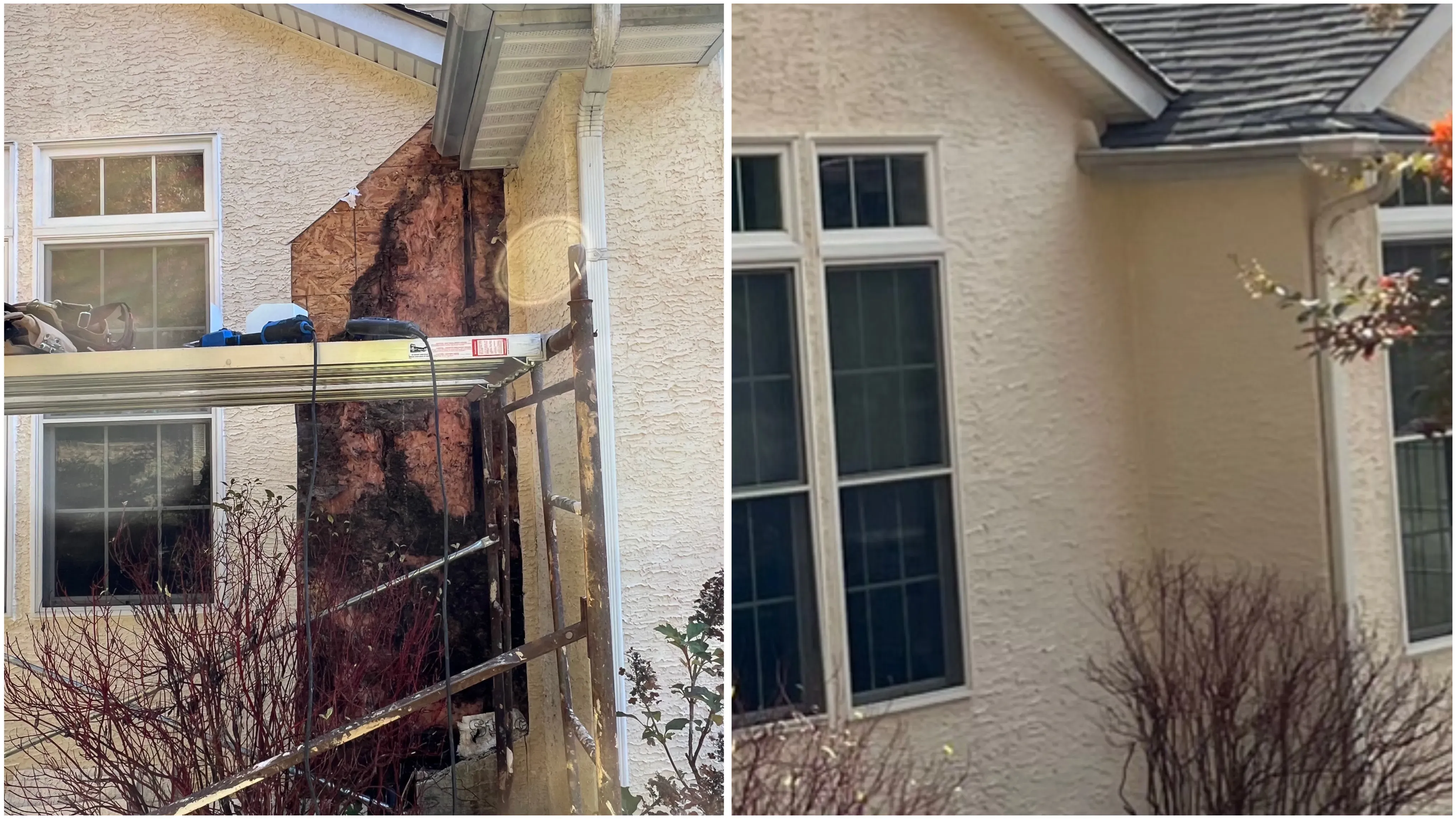
Stucco hides failure well. Cracks and stains may never appear on the surface while the sheathing and studs decay underneath. This is why building science matters more than surface appearance. Water management happens at transitions and flashings, not in the stucco itself. Faulty kickout flashing details at roof-to-wall intersections are a common entry point on Pennsylvania homes.
LePore Stucco Services LLC approaches these failures by tracing moisture to its source. The company repairs the flashing and sealing details that let water in, rather than replacing siding that was never the problem.
What Are the Warning Signs of Hidden Moisture?
Hidden moisture behind stucco rarely announces itself. Homeowners in Pennsylvania discover the damage only after wood rot and saturated insulation have already compromised the wall assembly. The earliest indicators appear on the surface, but the real problem sits behind the cladding.
Bubbling or bulging walls rank among the most telling signs. Raised or uneven patches often indicate trapped moisture beneath the stucco surface, a telltale sign of water intrusion. Philadelphia Stucco Remediation identifies this condition as a primary warning that water has breached the exterior system.
Persistent dark stains that never seem to dry point to the same underlying issue. Discoloration or streaking usually means moisture is seeping through the stucco and not drying out properly. A stain that survives dry weather signals an active leak, not a cosmetic blemish.
What Does Mold on Stucco Mean?
Extensive mold or mildew on exterior walls can mean the stucco system has failed and is retaining water. Surface cleaning removes the growth temporarily. The moisture source remains active behind the wall.
How Does Damaged Stucco Feel?
Soft or spongy stucco indicates the cladding has absorbed moisture and may be failing. Underlying wood rot or saturated insulation often causes that texture change. Homeowners who press against a wall and feel give should treat the condition as structural, not superficial.
Cracks, stains, and missing stucco can point to water behind the wall, not just a surface problem. LePore Stucco Services LLC evaluates these warning signs through a building science lens, tracing each symptom to its entry point. A Hockessin homeowner's guide to stucco water intrusion explains how these failures develop over time.
What Is Building Science and Why Does It Matter?
Building science examines how moisture, air, heat, and structural forces interact with a home's exterior. For Pennsylvania homeowners, this discipline explains why stucco failures happen even when the surface looks intact. Most exterior failures originate not in the stucco itself, but in missing or improperly executed flashing and unsealed transitions.
Water intrusion is typically caused by improper flashing at windows, doors, rooflines, and foundation transitions. This issue affects stucco, fiber cement, and HardiePlank homes alike. The cladding material rarely causes the problem. The details behind it do.
Why Does Water Get Behind Stucco?
Water trapped behind stucco can rot a home's frame before a single stain becomes visible. Hidden leaks often go unnoticed for years while the wood beneath slowly decays. Pennsylvania's freeze-thaw cycles accelerate this deterioration.
How Does Building Science Guide Repairs?
Contractors who apply building science principles concentrate on the true sources of intrusion:
Roof-to-wall intersections
Window and door openings
Deck and chimney interfaces
Wall penetrations
Targeting these transition points restores building envelopes without defaulting to full tear-offs. LePore Stucco Services LLC applies this approach across southeastern Pennsylvania, addressing the cause rather than masking symptoms.
How Does Surgical Stucco Repair Compare to Full Remediation?
Surgical stucco repair targets the specific source of moisture intrusion, such as faulty flashing, rather than removing the entire exterior cladding system. Full remediation strips away all stucco layers to expose and rebuild the underlying structure. The difference comes down to scope, cost, and how much demolition each approach requires.
Many Pennsylvania homeowners are told they need a full exterior tear-off when stucco shows signs of failure. In most cases, that recommendation is unnecessary. Water intrusion typically originates from improper flashing at windows, doors, rooflines, and foundation transitions. LePore Stucco Services LLC provides targeted, cost-effective stucco and flashing repairs that stop moisture at the source without unnecessary demolition. The company addresses kick-out flashing, window pan detailing, and transition work directly.
What Does Each Approach Cost in Pennsylvania?
The surgical stucco repair cost model differs sharply from full remediation pricing. Minor patching for small spots may cost between $900 and $3,000, according to the Stucco Remediation Cost Guide for PA and DE Homeowners. Those fixes rarely stop deep water leaks, though. Full stucco remediation for most Pennsylvania homeowners ranges from $21,000 for standard repairs to $75,000 for a full home replacement.
Approach | Scope | Typical Cost Range |
Minor patching | Surface-level spot fixes | $900 to $3,000 |
Surgical repair | Targeted flashing and moisture-source correction | Varies by scope |
Full remediation | Complete tear-off and rebuild | $21,000 to $75,000 |
When Is Full Remediation Actually Necessary?
Full remediation involves stripping away old layers to find and fix rotted wood and hidden mold. Once the frame is dry and stable, a high-quality water barrier and new siding are installed. This process becomes unavoidable when moisture damage has already compromised the structural sheathing. Homeowners weighing stucco remediation vs repair should understand that surgical intervention works best before rot spreads behind the wall. For Chester County residents evaluating their options, the distinction between stucco repair and remediation hinges on whether water has already reached the framing.
Building science principles guide the surgical approach. Water follows gravity and capillary action through unsealed transitions. Correcting those entry points early preserves the existing cladding and avoids the cost of full replacement.
How Do You Choose the Right Stucco Repair Approach?
Choosing the right stucco repair approach starts with understanding the difference between stucco remediation vs repair. Minor repair addresses isolated surface cracks. Surgical repair targets the specific moisture intrusion points behind the wall before full-scale remediation becomes necessary. Homeowners in Chester County and Delaware County, Pennsylvania, need professional services that address both visible damage and underlying water entry.
LePore Stucco Services LLC reviews moisture or stucco inspection reports before proposing any work. The company then develops a prioritized plan based on those findings. This building science approach identifies the true source of water entry rather than treating symptoms.
What Should a Homeowner Look for in a Repair Plan?
A responsible plan mitigates risk and avoids unnecessary demolition. LePore Stucco Services LLC delivers targeted, cost-effective repairs that resolve the cause of failure. The company's approach protects the home's frame from hidden rot and mold.
Review inspection findings before scoping work
Prioritize repairs based on moisture entry points
Avoid full tear-offs when surgical repairs suffice
Address flashing and sealing details, not just surface cracks
How Does Targeted Repair Compare to Full Remediation?
Factor | Targeted Repair | Full Remediation |
Scope | Isolated moisture entry points | Entire stucco system removal |
Demolition | Minimal | Extensive |
Cost | Lower | Higher |
Timeline | Shorter | Longer |
For homeowners seeking stucco repair chester county pa, expert guidance on moisture damage identification and remediation techniques is available through stucco repair guidance. The right approach keeps a home dry for the long term without unnecessary destruction.
FAQ
Why are most stucco tear-offs in Southeastern Pennsylvania unnecessary?
Water intrusion typically stems from faulty flashing at windows, doors, and roof transitions, not surface damage. What causes the rot behind stucco on Pennsylvania homes? Improper flashing details at windows, doors, and rooflines let water bypass the cladding. Insufficient drainage systems then trap moisture against the wood framing, feeding rot.
What warning signs indicate hidden moisture behind stucco?
Bubbling or bulging walls and persistent dark stains that never dry signal trapped moisture. These signs point to water intrusion behind the cladding.
Conclusion
For Southeastern Pennsylvania homeowners facing a stucco failure diagnosis, the decision rests on one question: has water already compromised the structural framing? When the answer is no, surgical repair that corrects flashing and transition details preserves the existing cladding and stops intrusion at its source. This building-science approach delivers lasting protection without the disruption and expense of a full tear-off. Homeowners should demand inspection-driven, prioritized plans that target moisture entry points before accepting demolition as the only path forward.
Comments